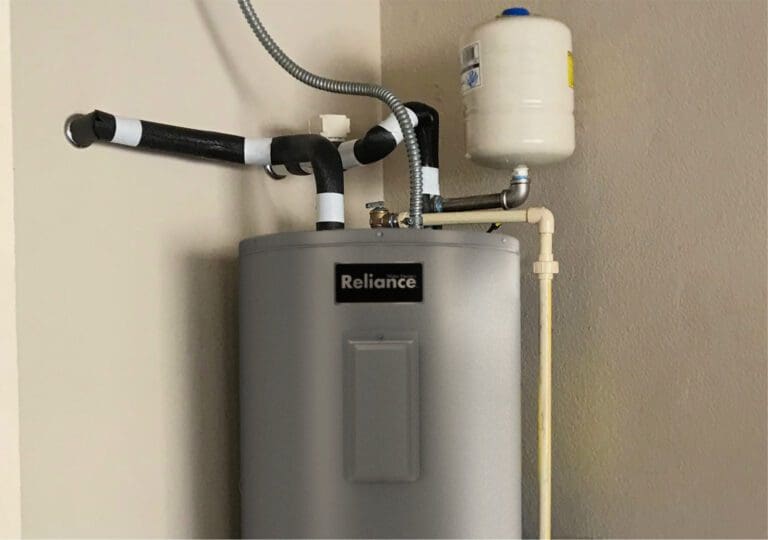
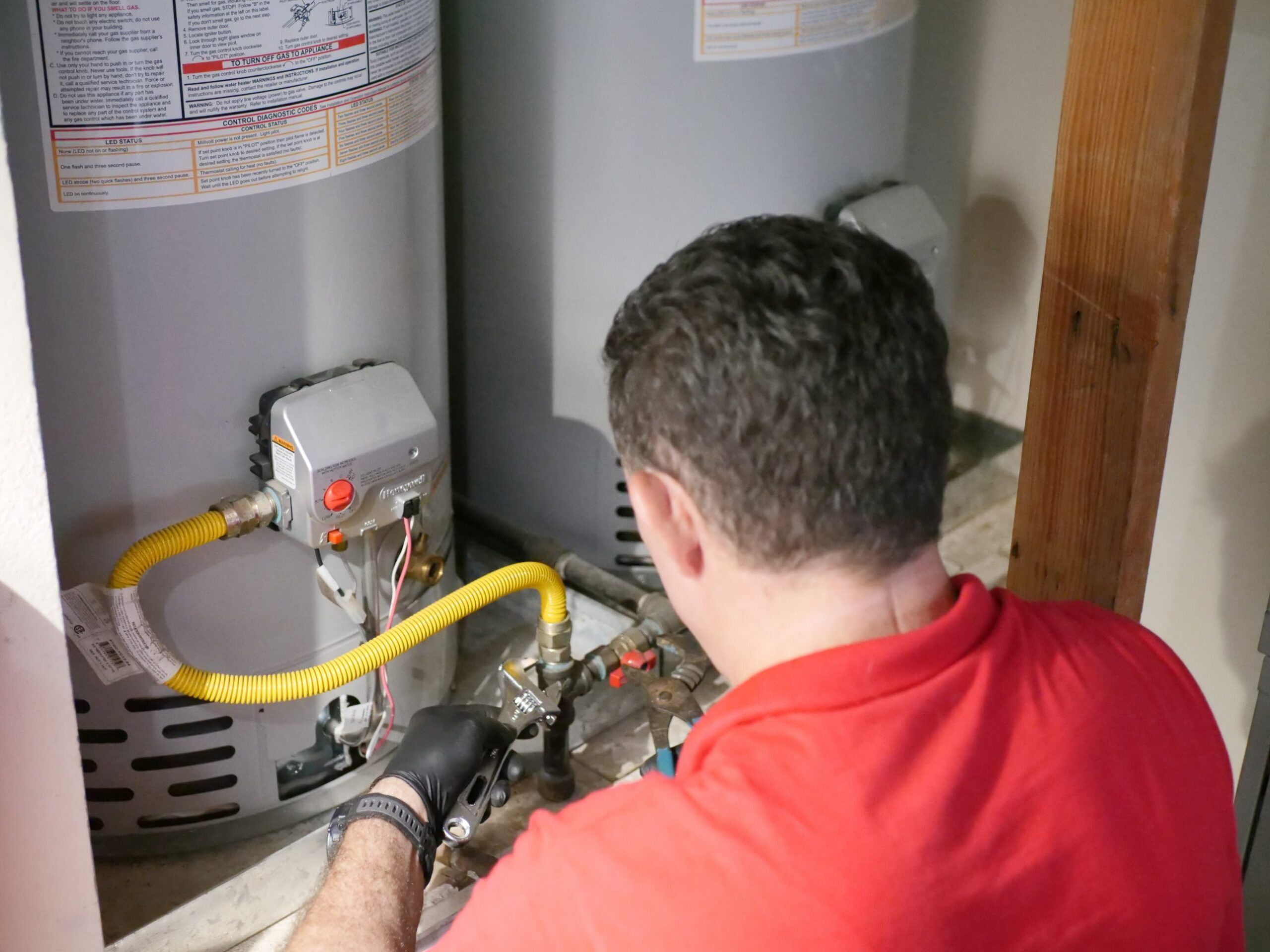
A tank-style water heater can work perfectly fine one day and create a major problem the next. That’s what makes deciding when to replace one difficult. Homeowners may have an aging water heater but it’s still working. This is when they often wonder “Should I replace it now or wait until something goes wrong?”
After more than 32 years in the plumbing industry, I’ve learned that there isn’t one age when every tank-style water heater should automatically be replaced. Age matters, but it isn’t the only thing to consider.
How much the water heater is used, where it’s located, whether the home has a hot-water recirculation system or salt-based water softener, its maintenance and repair history, changes in performance, rusty hot water, unusual noises, and the potential damage from a tank failure should all be part of the decision.
The goal isn’t to replace a perfectly serviceable water heater unnecessarily. It’s to recognize when relying on an aging tank may no longer be worth the risk.
How Long Does a Tank Water Heater Last?
A traditional tank water heater’s lifespan is typically around 8 to 12 years, but this isn’t an exact expiration date. Some water heaters last well beyond that range. Others don’t.
Some factors that affect tank water heater lifespan are:
- Water quality
- Maintenance
- Household usage
- How and where the tank was installed
- Recirculation
- Whole home water softening systems
Based on what we’ve seen servicing North Texas homes, another important question to ask is how hard has your water heater been working over the years?
Two water heaters may be the same age, but they may have experienced very different operating conditions. That’s why when your neighbor tells you their water heater lasted 15 years, that doesn’t necessarily mean the same will be true for you.
How Much You Use Your Water Heater Matters
Consider two homes with similar 50-gallon tank water heaters.
The first home has two people, and the other has a family of 6. Both households take showers, wash clothes, run the dishwasher and use hot water, but at much different rates.
Those two water heaters aren’t doing the same amount of work. Every time hot water leaves the tank, cold water enters and has to be heated. A household with greater hot-water demand generally requires its water heater to recover more frequently.
Usage is an important factor to consider along with age when evaluating how much longer your water heater will last.
Can a Hot-Water Recirculation System Affect Water Heater Life?
Hot-water recirculation systems are popular because they can reduce the amount of time you wait for hot water to reach fixtures farther from the water heater. But recirculation also changes how the system operates.
As hot water moves through the home’s plumbing, some heat is lost. The returning water then needs to be reheated.
Based on our team’s experiences, a tank serving a recirculation system may cycle more frequently, depending on how the system is designed, controlled, and operated.
That doesn’t mean recirculating hot water is bad. It simply means that when evaluating an aging water heater, how the system has been used matters just as much as how old it is.
How Does a Salt-Based Water Softener Affect a Tank Water Heater?
Salt based water softeners can affect the lifespan of a water heater. Tank-style water heaters typically use a sacrificial anode rod to help protect the steel tank from corrosion. The anode rod is designed to deteriorate over time, sacrificing itself to help protect the tank.
The condition of the anode rod deserves particular attention when a tank-style water heater is operating with softened water. As the rod becomes depleted, the tank loses that portion of its corrosion protection.
This doesn’t mean homeowners shouldn’t have a salt-based water softener. Softening water can provide benefits by reducing the hardness minerals that create scale throughout a home’s plumbing system.
It does mean that homeowners with both a salt-based water softener and a tank-style water heater should discuss how their water heater is maintained.
What About a Powered Anode Rod?
A powered anode may be an option for some tank-style water heaters.
Unlike a traditional sacrificial anode rod that is gradually consumed, a powered anode uses an electrical current to provide corrosion protection.
For a homeowner with a salt-based water softener, a qualified plumber can tell you whether the existing sacrificial anode should be inspected and whether a powered anode would benefit your system.
7 Signs It’s Time to Replace Your Water Heater
1. Your Water Heater Is Getting Older
Start by determining the age of your water heater.
The manufacturing information is typically found on the water heater’s data plate. Depending on the manufacturer, you may need to use the serial number to determine when the unit was manufactured.
Once you know the age, ask: How heavily has the water heater been used? Does the home have hot-water recirculation? Does the home have a salt-based water softener? Is the maintenance history known? Where is the water heater installed? Has it required previous repairs? Has hot-water performance changed? Is there moisture around the unit? Is there water in the drain pan? Have you noticed rusty or discolored hot water? What could be damaged if the tank leaked?
The older the heater becomes, the more important these questions become.
2. The Water Heater Tank Is Leaking
Components such as controls, thermostats, heating elements, valves, and other parts may be repairable depending on the heater and the problem.
A leaking tank is different.
If the tank itself has failed and is leaking, replacement is generally the appropriate solution. One mistake homeowners sometimes make is assuming: “My water heater doesn’t look rusty, so the tank must be fine” but that’s not necessarily true.
At Legacy Plumbing, we replace leaking water heaters regularly that showed no obvious exterior corrosion beforehand. The outside appearance of a water heater doesn’t tell you everything that’s happening inside the tank.
3. You’re Finding Water in or Around the Drain Pan
If your water heater sits in a drain pan, take a look inside it periodically. There shouldn’t be water sitting in the pan.
Water in the pan doesn’t immediately mean the tank has failed. The water could be coming from another source, and the cause should be diagnosed by a plumber.
This becomes increasingly important as the water heater ages, particularly if it’s installed in an attic, upstairs area, interior closet, or another location where a leak could cause extensive damage.
4. Your Water Heater Is Rumbling, Popping, or Crackling
Tank-style water heaters can become noisier as they age and sediment accumulates inside the tank. You may notice rumbling, popping, crackling, or other noises during a heating cycle.
We’ve also noticed during our years servicing North Texas water heaters that these noises can sometimes become more noticeable during colder weather.
When incoming water temperatures drop during the winter, the tank experiences a greater change in temperature as colder water enters and is heated. These heating and cooling cycles can make these sounds more noticeable.
Noise alone doesn’t mean your water heater needs to be replaced. But when an older water heater becomes noticeably noisier and other warning signs are also present, it’s worth having the unit evaluated.
5. Your Water Heater Needs a Repair and Is More Than Six Years Old
Not every broken water heater needs to be replaced. At Legacy Plumbing, we normally lean toward repairing tank-style water heaters less than six years old when the problem can be economically repaired and the tank itself isn’t leaking.
Once a water heater is more than six years old, the decision might need more consideration. Six years is not a specific lifespan, instead a marker of when systems tend to have passed their peak.
When discussing replacement, we consider age, repair cost, previous repairs, household use, and other factors mentioned earlier in this blog.
A good plumber should help you understand both repair and replace options so you can make that decision.
6. You’re Seeing Rusty or Discolored Hot Water
Pay attention if you begin noticing rusty or brownish water when using hot water.
One place homeowners may notice this is in the bathtub, where a larger volume of water against a light-colored surface can make discoloration easier to see.
Rusty water can come from a variety of sources in your home’s plumbing. However, rusty or discolored hot water combined with an aging tank is something we wouldn’t ignore.
If you’re noticing discoloration primarily when using hot water, especially at multiple fixtures, have a plumber evaluate your water heater and home plumbing systems.
7. A Leak Could Cause Expensive Damage to Your Home
Leaks are one of the most important considerations when deciding whether to proactively replace an aging water heater.
An aging water heater located in an attic, upstairs area, interior hallway closet, finished space, area next to cabinetry, or area with wood flooring can present a very different financial risk than a heater installed somewhere a leak can be more easily contained.
Do You Have Wood Floors Near Your Water Heater?
This is something homeowners with aging water heaters should seriously consider.
Our plumbers have seen what can happen when a homeowner waits too long and a water heater leaks onto wood flooring. At that point, the water heater may no longer be the expensive part of the problem.
Water can damage flooring and potentially spread into surrounding finished areas. Depending on what’s affected, restoration can become a significant expense. We’ve encountered situations where proactively replacing the aging water heater would have cost less than the homeowner’s insurance deductible following a water-damage claim.
Every home and insurance policy is different, so homeowners should review their own coverage and deductible. Don’t evaluate the cost of replacing an aging water heater without also considering the potential cost if that water heater fails where it’s currently installed.
Should I Replace My Water Heater Before It Starts Leaking?
Sometimes proactive replacement is the best decision. A common question we get is “Why would I replace my water heater if it still makes hot water and looks fine?”
The problem is that a water heater doesn’t always provide obvious warning signs of age or possible leaks. We’ve replaced many leaking units that didn’t have significant visible rust or corrosion on the outside beforehand.
The goal isn’t to scare homeowners into replacing functioning equipment. The goal is to make an informed decision before the water heater makes the decision for you.
Don’t Wait for Visible Rust to Tell You Your Water Heater Is Failing
Visible rust or corrosion should get your attention.
But the absence of obvious exterior corrosion doesn’t guarantee that the tank won’t leak.
That’s why we recommend looking at the complete picture: Age + usage + water conditions + maintenance + symptoms + repair history + location + consequences of failure.
Together, those factors tell you much more than simply looking at the outside of the tank.
What About Sediment and Water Heater Maintenance?
Sediment can accumulate inside a tank-style water heater over time.
Regular inspection and appropriate maintenance can help address sediment and allow other important components of the water-heating system to be evaluated. For homes with salt-based water softeners, the condition of the water heater’s anode should also be part of that maintenance conversation.
But water-heater flushing deserves a discussion of its own, particularly when dealing with an older water heater or a unit with an unknown maintenance history.
We’ll cover that in: Should You Flush Your Water Heater Every Year in North Texas?
Should You Repair or Replace Your Water Heater?
Repair may make sense when:
- The water heater is relatively young, especially under six years old.
- The problem involves a repairable component.
- The tank itself isn’t leaking.
- The repair cost makes sense compared with replacement.
- There aren’t several other warning signs.
It’s time to seriously consider replacement when:
- The tank itself is leaking.
- The heater is approaching the later portion of its expected service life.
- A significant repair is needed on a heater over six years old.
- Repairs are becoming repetitive.
- Hot-water performance is declining.
- You’re noticing rusty or discolored hot water.
- You’re finding unexplained water around the unit or in the drain pan.
- Several warning signs are occurring together.
- The heater has experienced heavy household use.
- The home has a hot-water recirculation system that results in more frequent reheating.
- The home has a salt-based water softener and the maintenance history or condition of the water heater’s anode is unknown.
- The heater is in an attic, upstairs, or above finished living space.
- A leak could damage wood flooring, cabinets, ceilings, or other costly finishes.
There isn’t one rule that works for every home.
The right decision depends on the water heater, how it has been used, how it has been maintained, where it’s installed, the problem you’re experiencing, and the consequences if it fails.
When Should You Call Legacy Plumbing?
You don’t need to wait until there’s water on the floor.
Consider having your tank water heater evaluated if:
- You don’t know how old it is.
- It’s approaching the later portion of its expected lifespan.
- You’re facing a substantial repair on an older heater.
- You see water in or around the drain pan.
- Your hot water has become rusty or discolored.
- The heater has become noticeably noisier.
- You’re running out of hot water sooner.
- You have an aging water heater combined with hot-water recirculation.
- You have a salt-based water softener and aren’t sure about the condition of the water heater’s anode.
- Your water heater is installed in an attic or upstairs.
- You have wood flooring or expensive finishes that could be damaged by a leak.
Not Sure Whether to Repair or Replace Your Water Heater?
You shouldn’t have to guess. Legacy Plumbing can evaluate your tank-style water heater’s age, condition, performance, repair needs, installation location, maintenance history, and usage to help you understand your options.
We don’t believe a water heater should automatically be replaced simply because it reaches a certain birthday. But we also don’t believe an aging water heater should be ignored simply because it’s producing hot water today.
Schedule your tank water heater service with Legacy Plumbing and make an informed decision before an unexpected leak makes the decision for you.
Frequently Asked Questions About Replacing a Water Heater
How long does a tank water heater last?
A traditional tank-style water heater commonly has an expected lifespan of approximately 8 to 12 years, but actual lifespan can vary. Usage, maintenance, water conditions, installation, recirculation, and other operating conditions can all affect how a water heater ages.
Should I replace a 10-year-old water heater that still works?
Not automatically. However, a 10-year-old tank water heater is old enough that its condition, repair history, usage, maintenance, location, and the potential consequences of a leak should be considered when deciding whether proactive replacement makes sense.
Is it better to repair or replace an older water heater?
At Legacy Plumbing, we normally favor repairing water heaters under about six years old when the problem can be economically repaired and the tank isn’t leaking. For older heaters, we believe homeowners should compare the repair cost with the heater’s age, history, condition, and potential remaining value.
Should I replace my water heater before it starts leaking?
Proactive replacement may make sense when an aging water heater is installed where a leak could cause substantial damage, such as an attic, upstairs area, interior closet, or near wood flooring. Age, usage, condition, repair history, and potential water damage should all be considered.
Does a water heater have to look rusty before it leaks?
No. In Legacy Plumbing’s field experience, leaking water heaters don’t always show obvious exterior corrosion before the tank fails. Exterior appearance should not be the only factor used to evaluate an aging water heater.
Why is my water heater popping or rumbling?
Popping or rumbling can become more common as sediment accumulates inside a tank-style water heater. In our experience, these noises can also become more noticeable during colder North Texas weather.
Does a large family shorten the life of a water heater?
A larger household generally uses more hot water, requiring the tank to recover and reheat more frequently. In Legacy Plumbing’s experience, usage is an important factor to consider alongside age when evaluating an older water heater.
Can a hot-water recirculation system affect a tank water heater?
A recirculation system moves hot water through portions of a home’s plumbing, where some heat is lost. Depending on the system’s design and controls, this can require a tank water heater to reheat water more frequently.
Can a salt-based water softener affect a tank water heater?
A salt-based water softener changes the water conditions inside a tank-style water heater. Because tank water heaters typically rely on a sacrificial anode rod for corrosion protection, Legacy Plumbing recommends considering the condition of the anode when maintaining or evaluating a water heater operating with softened water.
Can I install a powered anode rod if I have a water softener?
A compatible powered anode may be an option for some tank-style water heaters. Unlike a sacrificial anode that deteriorates over time, a powered anode uses an electrical current to provide corrosion protection. A plumber should determine whether a powered anode is appropriate and compatible with your particular water heater.
Does rusty hot water mean my water heater needs to be replaced?
Not necessarily. Rusty or discolored hot water should be properly diagnosed. However, rusty hot water combined with an aging tank or other warning signs is a good reason to have the water heater evaluated.
Is water in the water heater drain pan normal?
Water shouldn’t routinely be sitting in a water heater drain pan. It doesn’t automatically mean the tank itself is leaking, but the source of the water should be investigated.